
Is Diarrhea a Sign of Early Pregnancy? What the Hormones Do
Diarrhea can be a sign of early pregnancy, but it is not one of the most common or reliable ones. Digestive changes affect a large share of early pregnancies, yet constipation — not diarrhea — is the classic bowel complaint, and only a pregnancy test can confirm pregnancy. Updated 2026.
If your stomach is unsettled in the days around your missed period, it is understandable to wonder whether hormones are responsible. The short answer is that early pregnancy floods the body with hormones that act directly on the digestive tract, and for a minority of women that shows up as loose stools rather than constipation. But diarrhea alone cannot diagnose pregnancy — many non-pregnancy causes, from PMS to a stomach bug, produce the exact same symptom.
Is Diarrhea a Common Sign of Early Pregnancy?
Diarrhea is a possible early-pregnancy symptom, but it is not among the most common ones and it is never diagnostic on its own. Nausea and vomiting affect up to 80% of pregnancies and constipation affects roughly 40% (ACOG), while diarrhea in the first trimester is reported far less often — most sources describe it as an occasional complaint rather than a hallmark sign.
That does not make it meaningless. These hormones affect gut motility in every pregnant body; they just push most women toward slower digestion and a smaller group toward faster transit. If loose stools arrive alongside a missed period, tender breasts, or fatigue, pregnancy is worth checking for. The only way to know is a test, and timing matters — use our guide on when to take a pregnancy test so you test after hCG has risen enough to be detected.
Which Hormones Cause Diarrhea in Early Pregnancy — and How?
Three hormones drive most early-pregnancy digestive changes: hCG, progesterone, and prostaglandins. After implantation, hCG doubles roughly every 48–72 hours and peaks around week 10 at approximately 100,000 mIU/mL; progesterone rises from about 1 ng/mL before ovulation to roughly 10–29 ng/mL in the first trimester; and prostaglandin activity increases around the uterus. Together they relax or stimulate smooth muscle throughout the abdomen, including the intestines.
hCG itself does not act on the gut directly — it is the rapid hormonal cascade it triggers that matters. Progesterone relaxes smooth muscle, which slows the movement of food through the intestines and typically causes constipation. In some women, though, the gut responds in the opposite direction: higher prostaglandin levels stimulate intestinal contractions, food moves through too quickly for water to be fully absorbed, and the result is loose or watery stools. Stress, sudden dietary changes (many women overhaul their diet the moment they suspect pregnancy), and new prenatal vitamins can all amplify the effect. If you are tracking your early numbers, you can check your hCG levels to see whether they are rising in the expected pattern.
The Progesterone Paradox: Why Constipation for Most, Diarrhea for Some
The paradox is real and has a simple explanation: progesterone slows the gut, but it is not the only hormone in play. Progesterone relaxes intestinal smooth muscle and prolongs transit time — which is why about 4 in 10 pregnant women develop constipation. Prostaglandins do the opposite: they trigger muscular contractions, which is the same mechanism behind period cramps and PMS diarrhea. Whichever influence dominates in your body determines whether you end up constipated or running to the bathroom. Individual gut sensitivity, fiber intake, and hydration all tip the balance one way or the other.
Prenatal Vitamins and Diet Changes Can Add to the Problem
New supplements and sudden diet changes are an under-recognized cause of early-pregnancy diarrhea. Iron in prenatal vitamins classically causes constipation, but some women react to the vitamin's other minerals or the fillers with loose stools, and switching brands or taking the vitamin at night can change the picture. Equally, the moment a woman suspects pregnancy she often adds large amounts of fruit, vegetables, or whole grains — a sudden fiber jump from, say, 15 g to 30+ g per day can loosen stools within 48 hours. Nausea in early pregnancy also changes eating patterns: grazing on crackers all day and skipping normal meals disrupts the gut's routine in ways that can swing either toward constipation or diarrhea.
When Does Pregnancy Diarrhea Start? Timing vs PMS
Pregnancy-related diarrhea typically starts around weeks 4–6 of gestation — that is, around or just after the missed period, roughly 2–4 weeks after conception. PMS-related diarrhea, by contrast, strikes 1–3 days before menstrual bleeding and resolves once the period starts. The key timing difference: diarrhea that continues past the day your period was due is more suspicious for pregnancy than diarrhea that arrives and leaves with your cycle.
This is where implantation timing helps. Implantation occurs 6–12 days after ovulation (most often 8–10), and hCG becomes detectable in urine about 10–14 days after conception — which is why a missed period is the earliest practical signal. An implantation date calculator can estimate when implantation likely happened based on your cycle, which helps you judge whether your symptoms line up with pregnancy or with PMS. If you are unsure how many weeks pregnant you are, dating from the first day of your last period is the standard method providers use.
Worked Timeline: PMS Diarrhea vs Pregnancy Diarrhea
The distinguishing feature is timing, not the diarrhea itself: PMS diarrhea ends when bleeding begins, while pregnancy diarrhea begins when bleeding fails to arrive and lingers. Take a typical 28-day cycle with ovulation on day 14. In a PMS pattern, prostaglandins surge around days 26–28, causing cramps and 1–2 days of loose stools; bleeding starts on day 28 and the bowel symptoms fade within a day. In a pregnancy pattern, implantation happens around days 22–26, hCG starts rising, and digestive symptoms — including diarrhea — typically appear around days 28–35 (weeks 4–5) and may persist for days or weeks rather than resolving. The calendar behavior tells them apart. Symptoms also come and go in early pregnancy — it is completely normal to not feel pregnant at 8 weeks, and digestive symptoms wax and wane the same way.
Diarrhea vs Constipation in Early Pregnancy
Constipation is the classic early-pregnancy bowel symptom; diarrhea is the less common flip side of the same hormonal coin. Both stem from the same shift — progesterone relaxing smooth muscle while prostaglandins and dietary changes push motility in either direction — so it is entirely possible to alternate between the two within the same week.
Neither version predicts anything about the health of the pregnancy. Constipation tends to worsen as pregnancy progresses (rising progesterone plus pressure from the growing uterus), while early diarrhea often settles by weeks 12–14 as hormone levels stabilize. One practical confusion to avoid: intestinal cramping from diarrhea can feel like uterine cramping, and mild cramping is a normal early pregnancy symptom on its own — if the cramping comes in waves with urgent bowel movements and passes after a bathroom trip, the gut is the likely source, not the uterus.
What Is Normal vs When to Call Your Doctor
Brief, mild diarrhea — loose stools for 24–48 hours without fever, blood, or severe pain — is usually not a cause for alarm in early pregnancy. The concern is dehydration and infection, not the loose stools themselves. Call your doctor or midwife promptly if any of the following apply: diarrhea lasting more than 48 hours; blood or mucus in the stool; fever of 100.4°F (38°C) or higher; severe or one-sided abdominal pain; vomiting that prevents you from keeping fluids down for 24 hours; or signs of dehydration such as very dark urine, dizziness, dry mouth, or urinating much less than usual.
Dehydration matters more in pregnancy because your blood volume is expanding and the fetus depends on steady fluid and nutrient delivery. Aim for at least 8–12 cups (2–3 L) of water per day during a bout of diarrhea, and use an oral rehydration solution — the WHO-recommended formulation replaces the sodium, potassium, and glucose lost in watery stools far better than plain water alone. Sharp, one-sided pelvic pain with bleeding is a different red flag entirely: learn the signs that could point to an ectopic pregnancy and seek urgent care if that pattern appears, since it needs emergency evaluation regardless of bowel symptoms.

How to Get Relief From Diarrhea Safely in Early Pregnancy
The safest relief strategy is hydration plus gentle eating: replace fluids aggressively, eat small bland meals, and avoid common gut irritants until stools normalize.
Practical steps that help:
- Hydrate on a schedule. Sip water, clear broth, or oral rehydration solution throughout the day rather than gulping large amounts at once; aim for pale-yellow urine as your guide.
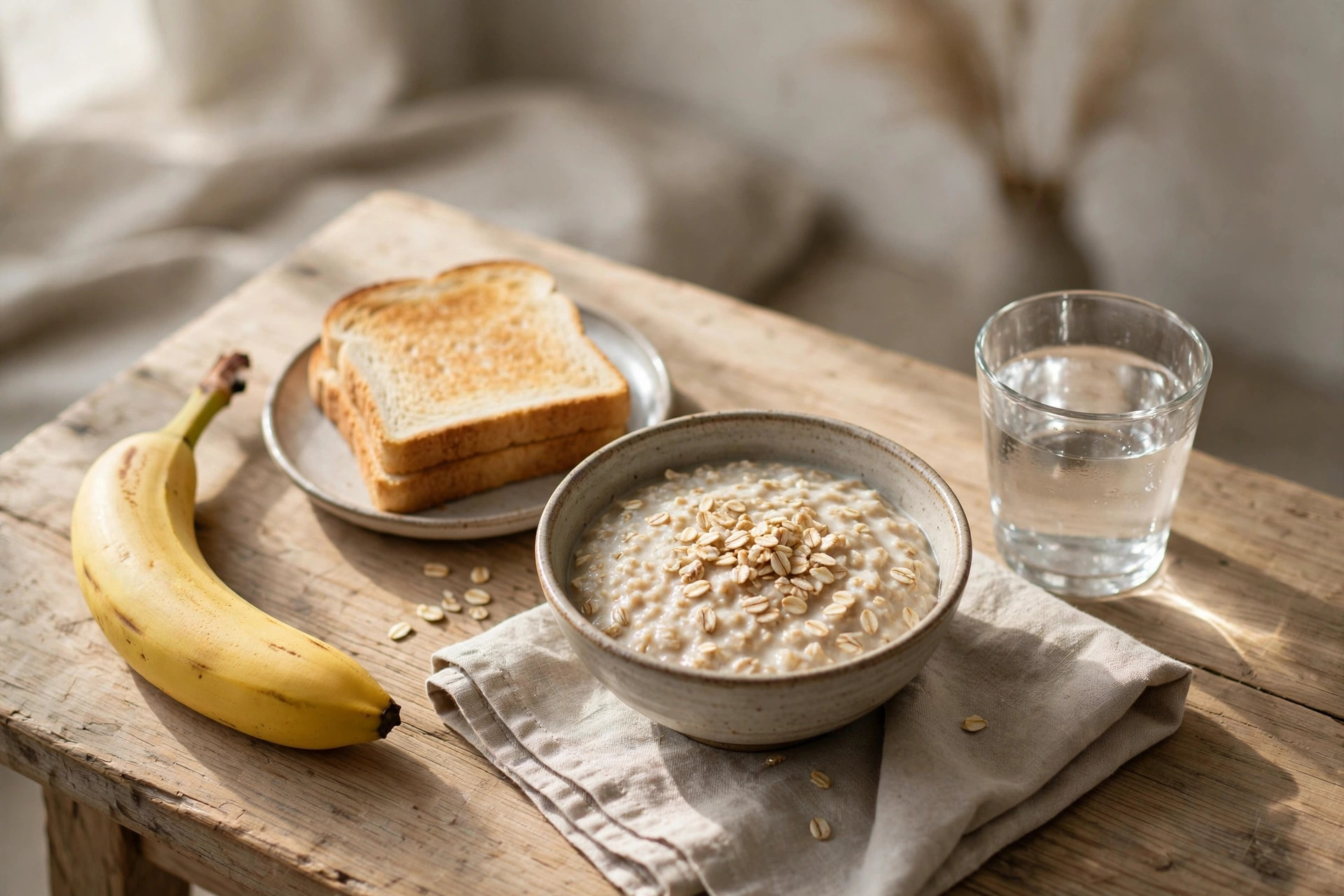
- Eat bland and small. Plain rice, toast, bananas, applesauce, oatmeal, and boiled potatoes are easy on an unsettled gut. Skip spicy, greasy, and very high-fiber foods for 24–48 hours.
- Pause the suspects. If diarrhea started right after a new prenatal vitamin, ask your provider about trying a different formulation or taking it with food at night — do not stop it on your own without discussing alternatives.
- Avoid anti-diarrhea drugs unless your provider approves. Loperamide (Imodium) is sometimes used in pregnancy but only with medical guidance, and bismuth subsalicylate (Pepto-Bismol) is generally avoided because of its salicylate content.
- Rest your gut, not just your body. Stress hormones worsen bowel symptoms; short rest breaks genuinely help.
Most cases resolve within a couple of days. Track how your symptoms evolve alongside everything else — what to expect week by week in early pregnancy gives you a realistic picture of which symptoms are typical at each stage so you can tell normal fluctuation from something that needs a call.
The Bottom Line
Diarrhea can be a sign of early pregnancy, but it is an uncommon and unreliable one — constipation, nausea, fatigue, and breast tenderness are far more typical, and none of them confirm pregnancy without a test. The hormones of early pregnancy explain why digestion goes haywire, and the progesterone paradox explains why some women get diarrhea while most get constipated. Treat brief bouts with fluids and bland food, and call your provider for anything lasting over 48 hours, involving blood or fever, or paired with dehydration signs.
Still waiting to find out? Our when to take a pregnancy test calculator tells you the earliest reliable day to test based on your cycle and ovulation date — because symptoms can hint, but only a test can tell.