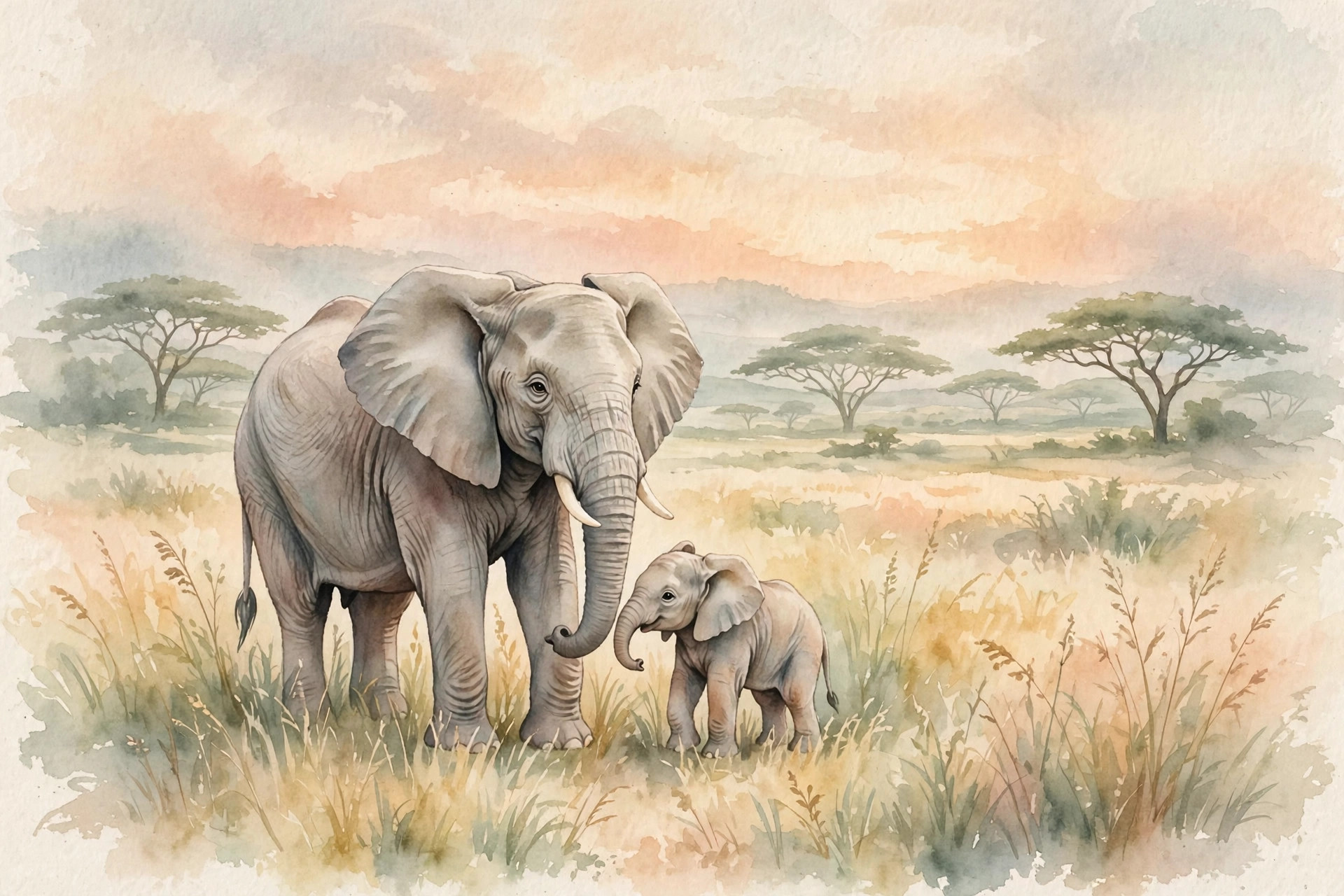
An elephant is pregnant for about 22 months — roughly 660 days, or a little over a year and a half. It's the longest pregnancy of any land animal on Earth. African elephants average 22 months (around 645–685 days), while Asian elephants come in slightly shorter at about 18–22 months. If you're used to pet timelines — a dog's neat 63 days or a cat's 65 — nearly two years can sound almost unbelievable, but for an animal born weighing as much as a grown man, the long wait makes sense.
Here's why elephant pregnancy takes so long, what happens month by month, and how it compares with other animals.
How Long Is an Elephant Pregnant, Exactly?
The headline number is 22 months for African elephants, the species most people picture. Asian elephants average closer to 18–22 months, with many births recorded around the 20-month mark. Individual variation is real: a healthy elephant pregnancy can finish anywhere from about 20 to 23 months and still produce a perfectly normal calf.
For comparison, that's:
- About 2.4 times a human pregnancy (9 months)
- More than 10 times a dog's pregnancy (our dog pregnancy due date calculator works in days; an elephant version would need a wall calendar)
- Roughly double a horse's 11-month gestation — track a mare with the horse pregnancy due date calculator
Zoos track elephant pregnancies with blood hormone tests and ultrasound, because outward signs are subtle for the first year or more. In the wild, researchers mostly wait and watch.
Why Does Elephant Pregnancy Take So Long?
Two big reasons: size and brain.
An elephant calf is born weighing around 120 kg (260 lb) and standing about 85 cm (2.8 ft) tall at the shoulder. It needs to walk, follow the herd, and keep up with animals that migrate long distances within hours of birth. That takes a lot of building — big bones, strong legs, and a fully working digestive system ready to grow on milk for years.
The brain is the bigger story. Elephants have the largest brain of any land mammal (about 5 kg / 11 lb, roughly three times a human's), and much of its complex wiring — memory, social recognition, problem-solving — is laid down before birth. A newborn elephant already recognizes its mother's voice and rumbles. Development that sophisticated simply cannot be rushed.
There's also a reproductive quirk: elephants have the longest estrous cycle of any mammal, about 13–17 weeks, with an unusually long hormone pattern (two LH surges) that baffled scientists for years. Their bodies run on a slow, deliberate clock in almost everything — including making babies.
Elephant Pregnancy Timeline: What Happens Over 22 Months
Because the gestation is so long, keepers usually divide it into rough quarters rather than weeks:
- Months 1–5: Almost nothing shows outwardly. The embryo develops slowly; hormone tests (progesterone and prolactin patterns) are the only reliable confirmation, and zoos may ultrasound from a few months in.
- Months 6–11: The fetus grows steadily. The mother's appetite increases, but her silhouette barely changes — an elephant's body is so large that a growing calf is easy to hide.
- Months 12–17: Weight gain becomes measurable, and ultrasound shows a calf that already looks like a miniature elephant, trunk and all.
- Months 18–22: Final growth spurt. The calf gains much of its birth weight late in pregnancy. Keepers watch for udder development, restlessness, and changes in hormone levels that signal birth is days away.
Calves are almost always born at night or in the early morning, standing up — the drop to the ground helps break the umbilical cord. Within minutes the calf tries to stand; within hours it walks and starts learning to use its trunk (a skill that takes months to master — newborns often step on it).
Signs an Elephant Is Pregnant
In the wild, honestly, there often aren't clear ones until very late. In zoos and sanctuaries, keepers rely on:
- Hormone profiles: Regular blood or urine tests showing the elephant's distinctive pregnancy hormone pattern.
- Ultrasound: Confirms the pregnancy and, later, the calf's position and heartbeat.
- Appetite and weight changes: Steady increases from mid-pregnancy onward.
- Late-stage changes: Udder enlargement, a visibly shifting belly shape in the final months, and restlessness as labor approaches.
Just as with pets, the reliable route is testing rather than guesswork — the same reason our animal due-date tools, like the cattle pregnancy due date calculator (283 days) and the goat pregnancy due date calculator (150 days), start from a confirmed breeding date.
How Elephant Pregnancy Compares With Other Animals
Elephants sit at the top of the land-animal league table, but the whole ranking is a fun reminder that gestation scales (loosely) with size and brain development:
| Animal | Pregnancy length |
|---|---|
| Elephant (African) | ~22 months (660 days) |
| Elephant (Asian) | ~18–22 months |
| Horse | ~11 months (340 days) |
| Cow | ~9.5 months (283 days) |
| Human | ~9 months (280 days) |
| Goat | ~5 months (150 days) |
| Dog | ~2 months (63 days) |
| Cat | ~2 months (65 days) |
Track the shorter ones yourself with the cat pregnancy due date calculator or the dog calculator linked above — or browse more animal and pregnancy guides on our blog.
One Calf, Years Apart
An elephant almost always carries a single calf; twins are rare (around 1% of births) and often don't both survive in the wild. After birth, the calf nurses for 2–4 years (sometimes longer), and the mother usually won't conceive again for about 4–5 years total between calves. Combined with a 22-month pregnancy, that means a female elephant raises relatively few calves in her 60–70-year lifetime — one of the reasons elephant populations recover so slowly from poaching and habitat loss.
The flip side: calves get an extraordinarily long, protected childhood, learning migration routes, water sources, and social rules from mothers and grandmothers — knowledge zoologists believe can span decades in a matriarch's memory.
How Do Zoos Predict an Elephant's Due Date?
With a 22-month pregnancy and an individual range of several weeks, "when is it due?" is a genuinely hard question even for professionals. Elephant keepers combine three clues:
- The conception window: Elephants' cycles are tracked with hormone tests, so zoos usually know conception within a week or so — that starts the 660-day clock.
- Hormone changes near term: Prolactin and progesterone patterns shift in the final weeks, and a marked drop shortly before birth is one of the most useful countdown signals keepers have.
- Physical and behavior changes: Udder development, restlessness, reduced appetite, and spending more time alone or swaying in place all suggest the final days.
Even with all three, births are routinely predicted as a window of several weeks, and elephant houses staff night watches for a month or more around the expected date. A healthy "surprise" a fortnight early or late is completely normal — the same lesson every due-date estimator teaches, just stretched over two years instead of nine months.
The Short Answer
If someone asks "how long is an elephant pregnant?" the answer is: about 22 months for African elephants and 18–22 months for Asian elephants — the longest pregnancy of any land animal, producing a ~120 kg calf that stands within hours and nurses for years. It's slow reproduction by design, and it's exactly why every elephant birth, in the wild or in a zoo, is a genuine event.
Curious how your own pet's timeline stacks up? Try the dog pregnancy due date calculator — 63 days goes by a lot faster than 660.