
Pregnancy cravings often start surprisingly early — many people notice their first strong cravings between weeks 5 and 8, in the first trimester. They tend to peak in the second trimester, when appetite returns and energy lifts, and then ease off in the third trimester. But the pattern varies a lot: some people crave from the week they miss a period, others never crave much at all.
If you are wondering whether what you are experiencing is typical, you are not alone. Cravings are one of the most talked-about early signs of pregnancy, along with nausea and a heightened sense of smell. You can place your symptoms in context with our early signs of pregnancy guide and work out your current week with the due date calculator.
Here is when cravings usually start, why they happen, the foods people crave most, and how to handle cravings in a way that feels good.
When Do Cravings Typically Start?
For most people, cravings begin in the first trimester — often before the second missed period. Studies and surveys consistently find that 50–90% of pregnant people report at least one craving, and the most common starting window is weeks 5–10.
A typical arc looks like this:
- First trimester (weeks 1–13): Cravings appear, but nausea and food aversions are also at their strongest. You might crave one specific food intensely while most other foods seem unappealing. Sour, salty, and cold foods are common early favourites because they cut through nausea.
- Second trimester (weeks 14–27): This is peak craving season for many. Nausea usually lifts, appetite returns, and cravings become broader and stronger. Sweet foods, fruit, dairy, and comfort carbs feature heavily.
- Third trimester (weeks 28–40): Cravings often continue but may feel less intense, partly because there is physically less room for large meals. Smaller, more frequent snacks become the pattern.
Some people notice cravings before they even test positive — a sudden, specific desire for pickles, citrus, or ice that feels out of character. Others develop them gradually. Both are normal. If you are trying to date your pregnancy, our pregnancy week-by-week guide shows what is typical at each stage.
What Causes Pregnancy Cravings?
There is no single cause, and researchers think several things work together:
Hormonal changes. Rising estrogen and progesterone in the first trimester change taste and smell sensitivity. Foods can taste more intense, bitter flavours become harsher, and smells that never bothered you suddenly feel overwhelming. That shift alone can create strong likes and dislikes.
Increased energy needs. Your body is building a placenta, increasing blood volume, and growing a baby. In the second trimester especially, a genuine rise in calorie needs can show up as cravings for energy-dense foods — carbs, cheese, sweet things.
Nutrient signals (sometimes). Craving red meat or spinach occasionally coincides with higher iron needs, and craving dairy can align with calcium demands. But the link is loose — craving chocolate does not reliably mean a magnesium shortage. It is one possible nudge, not a diagnostic tool.
Comfort and emotion. Pregnancy is physically demanding and emotionally big. Craving a childhood favourite, a specific takeaway, or a food from home is often about comfort and familiarity as much as hunger.
Cultural expectations. What counts as a “typical” craving varies by country — pickles and ice cream in the US, tamarind and sour fruit in South Asia, citrus and salty snacks in many places. Expectation shapes what we notice and remember.
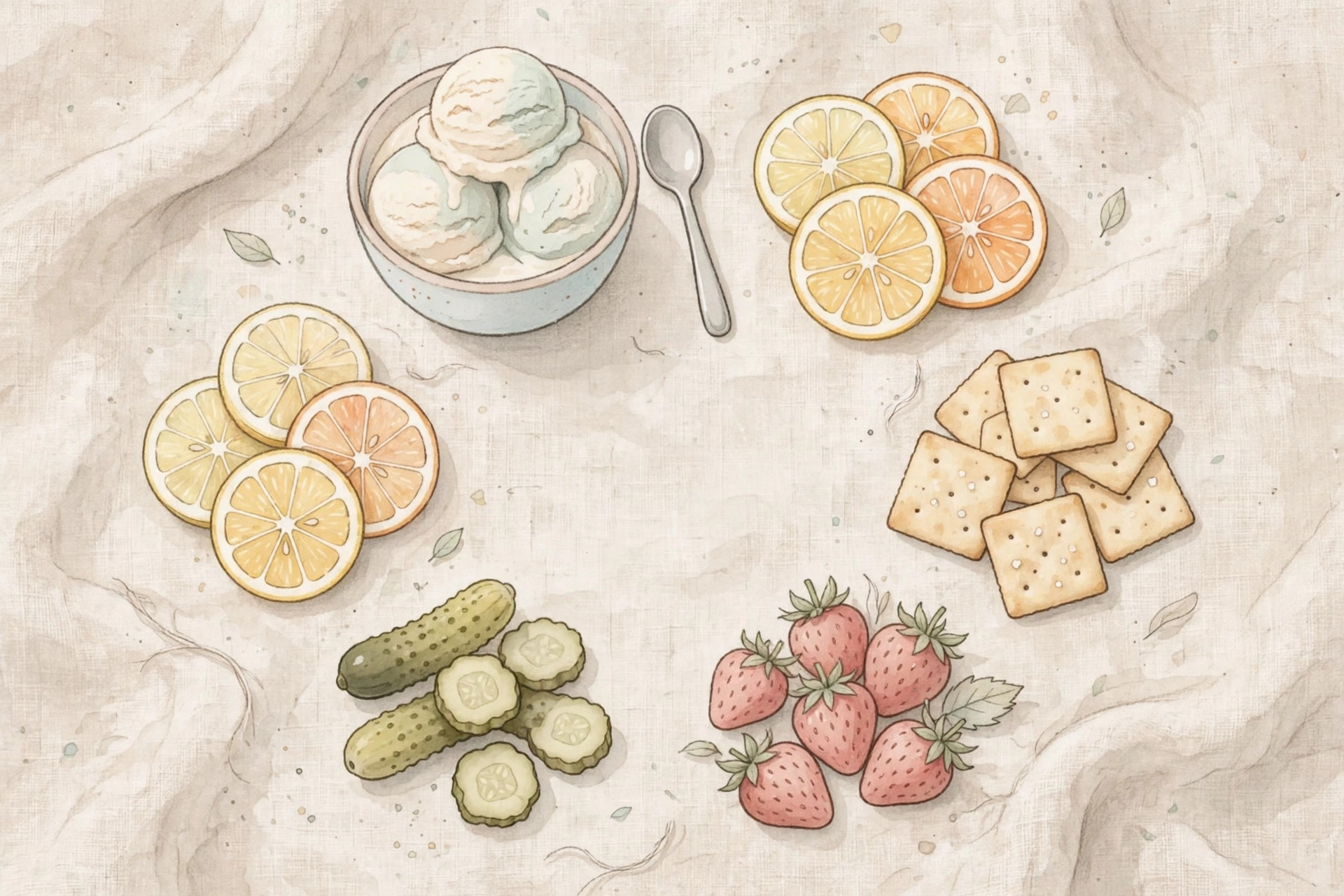
The Most Common Pregnancy Cravings
Across surveys, the same categories come up again and again:
- Sweet foods: chocolate, ice cream, fruit, juice, and baked goods — the single most craved category in many Western surveys.
- Fruit, especially citrus and berries: tartness and freshness appeal when taste buds are heightened and nausea is present.
- Salty and savoury snacks: pickles, olives, chips, cheese, and salted nuts.
- Dairy: milk, cheese, yoghurt, and milkshakes.
- Carbohydrates: bread, pasta, rice, and potatoes — bland, filling, and easy on a queasy stomach.
- Sour foods: lemons, vinegar-based foods, sour candy — often craved in the first trimester.
Aversions are the flip side and are just as common: coffee, meat, eggs, and strongly spiced foods top the aversion lists. Craving one food group while being unable to face another is a very typical first-trimester pattern.
It can help to check whether your overall intake is on track. Our pregnancy weight gain calculator shows the healthy gain range for your BMI, and the hCG level checker is there if you are also tracking early hormone levels.
Cravings vs. Hunger: How to Tell the Difference
A craving is specific — I need pickles, now — and often visual or memory-driven: you see a photo, smell something, or remember a taste. Pregnancy hunger is broader — I need to eat something, soon — and comes with physical signs like an empty stomach, low energy, or light-headedness.
In the second trimester, both increase. Many people find the pattern is: true hunger every 2–3 hours, with 1–2 intense cravings a day layered on top. Neither is a problem on its own. The practical question is whether cravings are crowding out a broadly balanced diet — and for most people, they are not.
How to Handle Cravings Safely
You do not need to fight cravings or obey every one. A middle path works best:
- Eat regularly. Three meals plus 2–3 snacks keeps blood sugar steadier and takes the edge off intense cravings. Going too long without eating makes cravings feel urgent.
- Keep craved foods available in sensible portions. Having the ice cream in the freezer and serving a small bowl is usually easier than banning it and then overeating later.
- Pair cravings with nutrition when you can. Craving chips? Have a small handful with a cheese stick or hummus. Craving sweets? Fruit with yoghurt gives the sweet hit plus protein and calcium. It does not need to be perfect — “good enough” most of the time is genuinely good enough.
- Watch the food-safety basics. Avoid unpasteurised soft cheeses, raw or undercooked meat and eggs, high-mercury fish, and deli meats unless reheated until steaming. Craving sushi? Cooked options give the same satisfaction safely.
- Stay hydrated. Thirst sometimes disguises itself as a craving for juicy or cold foods. A glass of water first can clarify what you actually want.
If nausea is still the dominant feeling, smaller bland meals, ginger, and eating before you get very hungry can help more than willpower. Our early signs of pregnancy guide covers nausea timing in detail.
Pica: When Cravings Are Not Food
Occasionally, cravings target non-food items — ice, clay, chalk, starch, or soil. Wanting to chew ice (pagophagia) is the most common and is sometimes linked with iron deficiency. Craving non-food substances is called pica, and it is worth mentioning to your provider at your next appointment — not because you have done anything wrong, but because it can occasionally signal low iron or another deficiency that is easy to test for and treat.
Do not eat non-food items other than ice. If the urge is strong, tell your provider sooner rather than waiting for a routine visit.
When to Mention Cravings to Your Provider
Most cravings need no medical attention. Do bring them up if:
- You are craving non-food items (see pica above)
- Cravings have replaced meals so completely that you are eating almost nothing else
- You have gestational diabetes and sweet cravings are making blood-sugar targets hard to meet — your provider or dietitian can help you plan satisfying alternatives
- You notice rapid weight change in either direction that worries you
Otherwise, cravings are a normal, often enjoyable part of pregnancy. Many people remember their specific craving — the one brand of pickle, the 11pm oranges — with real fondness afterwards.
The Bottom Line
Pregnancy cravings most often start in the first trimester (weeks 5–8 is common), peak in the second, and soften in the third. Hormones, heightened taste and smell, real increases in energy needs, and comfort all play a part. Sweet foods, fruit, dairy, salty snacks, and carbs are the most craved categories, and enjoying them in sensible portions as part of a broadly balanced diet is a perfectly healthy approach.
Want to know where you are in the timeline? Use our due date calculator to confirm your week, then follow your progress in the week-by-week guide — and if you are tracking your overall intake, the pregnancy weight gain calculator will show you the recommended range for your stage.