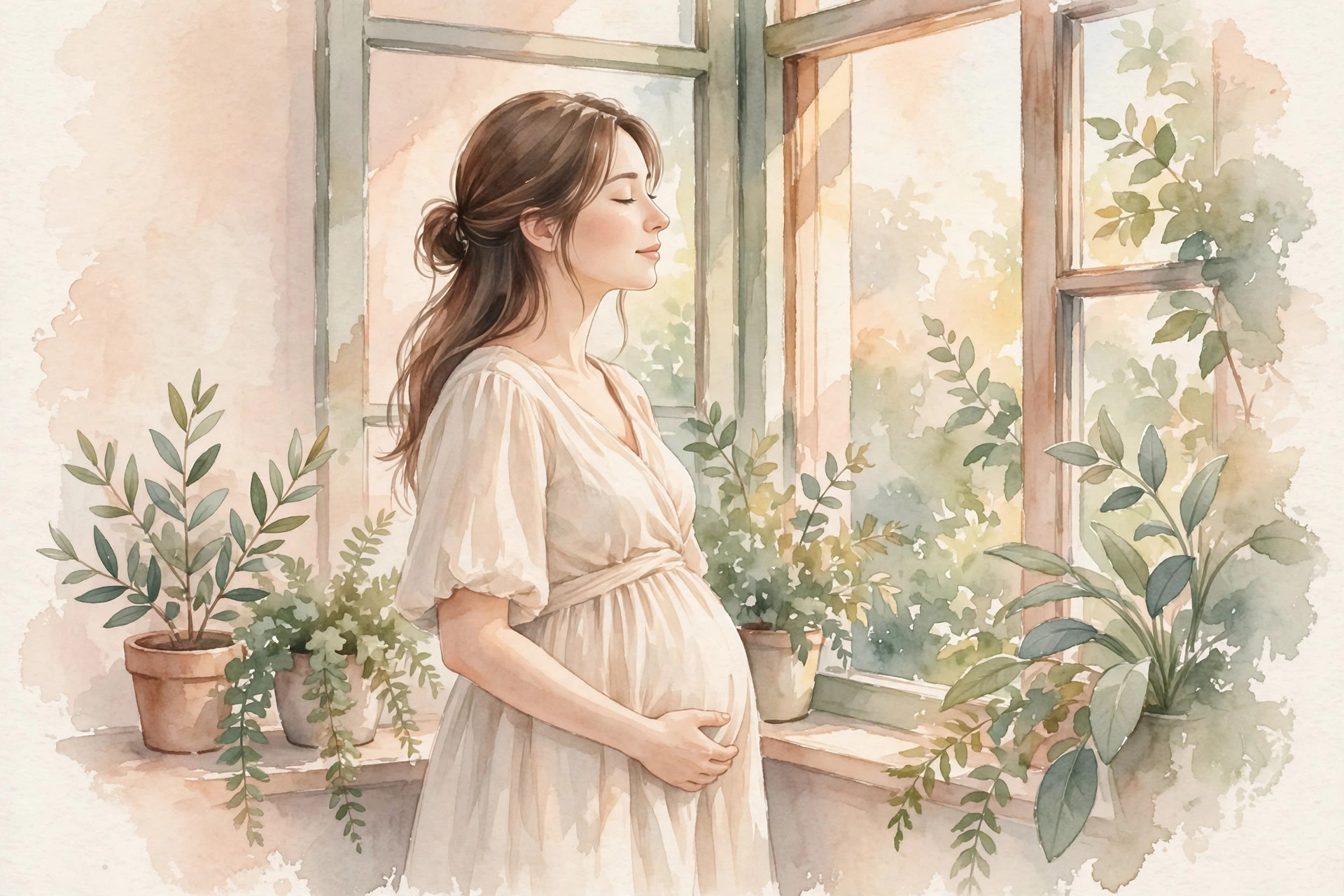
Most people start showing in pregnancy between 12 and 20 weeks. If this is your first pregnancy, you will usually notice a small bump around 14–18 weeks, while second or third pregnancies often show earlier — sometimes as soon as 10–12 weeks. There is no single “right” week, and a flat stomach at 14 weeks is just as normal as a visible bump at 12 weeks.
If you are trying to figure out where you are right now, our due date calculator and week-by-week guide can help you place today’s changes in context. The bump appears when your growing uterus rises out of the pelvis and starts to push your abdomen forward — until then, what looks like “showing” is usually bloating.
Here is how the timeline usually unfolds, what makes it earlier or later, and when to check in with your provider.
The Short Answer: It Is Later Than Most People Expect
Your uterus starts out tucked low in your pelvis, about the size of a pear. For the first 10–12 weeks it grows, but it stays behind the pubic bone, so from the outside almost nothing changes. Around 12 weeks, the top of the uterus (the fundus) rises just above the pubic bone. That is the first moment a bump can become visible — though for many first-time parents it is still easy to hide under loose clothing.
By 16 weeks, the uterus is halfway between your pubic bone and belly button, and most people notice their regular jeans feeling tight. By 20 weeks, it reaches the belly button, and a clear bump is visible for the majority of pregnancies. After that, growth is steady — roughly a centimetre a week in fundal height — which is why the third trimester bump is unmistakable.
It helps to compare this with what you feel versus what others see. You will feel showing before anyone else notices. A slight rounding when you look down, a waistband that digs in by evening, or a profile change in the mirror at 13 weeks counts as showing for you, even if colleagues do not comment until 20 weeks.
First Pregnancy vs. Second (and Beyond)
This is the single biggest predictor. In a first pregnancy, your abdominal muscles and ligaments have never stretched this way before. They hold the uterus in more tightly, so the bump tends to “pop” later — often 16–20 weeks.
In second and later pregnancies, those muscles have more give. Many people report showing 4–6 weeks earlier than the first time, sometimes noticing a bump at 10–12 weeks. It can feel surprisingly early, but it is not a sign of anything wrong — it is your body remembering the shape.
There is a wide normal range even within the same person. Two pregnancies in the same body can show a month apart because of baby’s position, placenta placement, and how much bloating is in the mix that week.
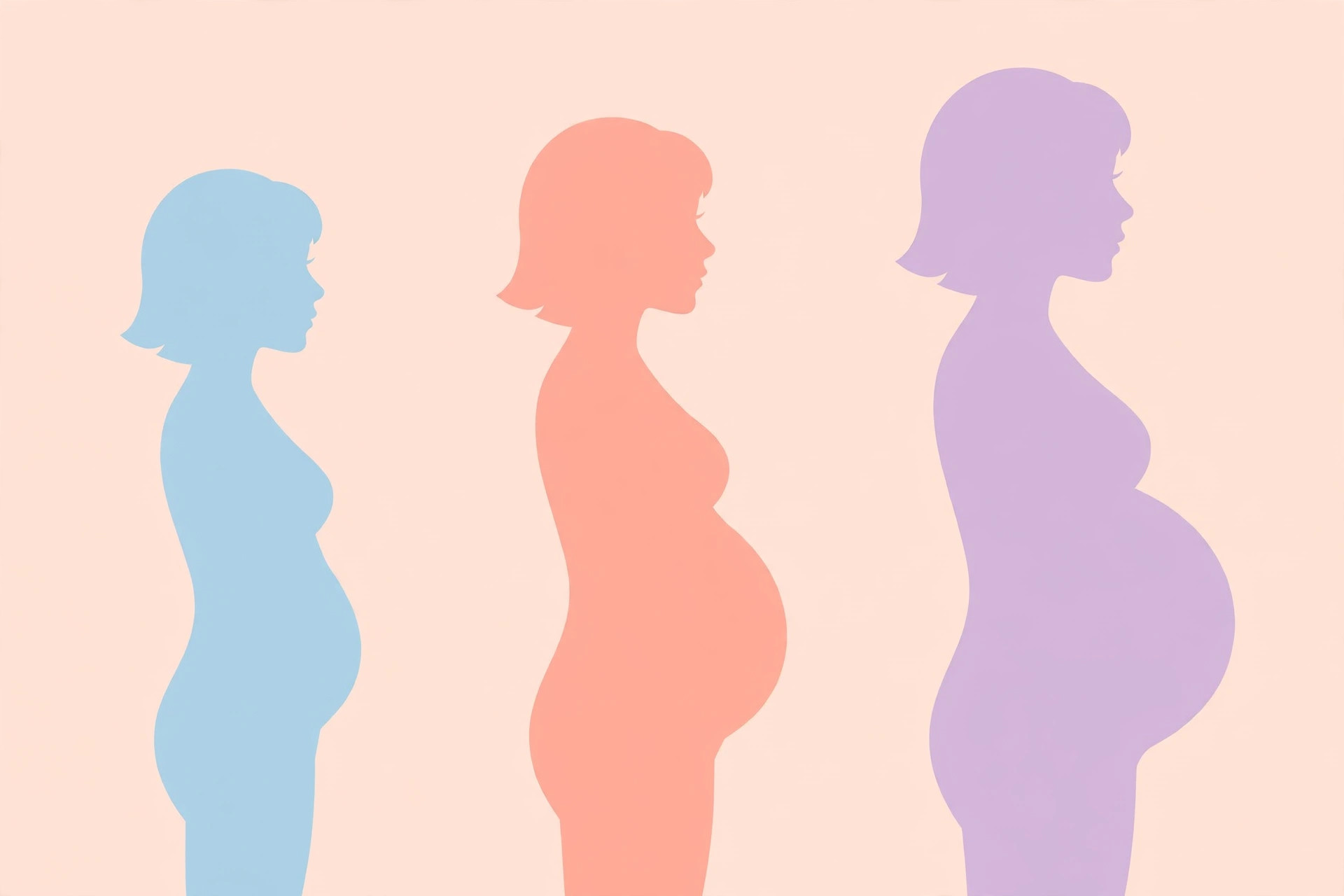
What Affects When You Show?
Several ordinary factors move the timeline by a few weeks either way:
Body shape and height. Taller people and those with a longer torso have more vertical room for the uterus to grow before it pushes outward, so they often show later. Shorter torsos have less room, so the bump tends to appear earlier and look more pronounced.
Starting weight and muscle tone. Stronger abdominal muscles can hold the bump in longer. If you have more soft tissue around the midsection, early changes may be less distinct at first and then become clear quite quickly once the uterus is above the pelvis.
Bloating vs. baby bump. In the first trimester, progesterone slows digestion. Gas and water retention can make your belly look noticeably rounder by evening — then flatter again in the morning. That early “bump” is real, but it is not yet the uterus. The true bump is firmer, stays consistent through the day, and sits low at first.
Baby and placenta position. A baby who favours the front of the uterus, or an anterior placenta (on the front wall), can make the bump look a touch fuller earlier. A retroverted (tilted-back) uterus in early pregnancy can delay showing by a week or two until it tips forward, which it almost always does by the second trimester.
Twins and multiples. With two (or more) babies, the uterus grows faster — expect to show noticeably earlier, often by 10–14 weeks, and to measure ahead throughout. Our twin pregnancy weight gain calculator can help you track the related changes.
None of these factors, on their own, say anything about your baby’s health. They are geometry, muscle, and timing.
Week-by-Week: What Showing Usually Looks Like
Weeks 8–12: mostly bloating. Your uterus is still in the pelvis. Clothes may feel snug by late afternoon, but a visible bump is uncommon, especially in a first pregnancy.
Weeks 12–16: the “is it or isn’t it” phase. The uterus emerges above the pubic bone. You might notice a small, firm rounding low on your abdomen — easiest to see lying down or first thing in the morning. Many people describe it as “thickening” rather than a bump.
Weeks 16–20: the bump becomes clear. For most first pregnancies, this is when fitted tops start to show a real curve. By the anatomy scan at 18–20 weeks, the majority of people look recognisably pregnant, at least to those who know them.
Weeks 20–28: steady growth. The uterus reaches and then passes the belly button. The bump is visible in most clothing, and fundal height roughly tracks your week number in centimetres.
Weeks 28–40: unmistakable. Growth continues and the shape shifts as the baby drops lower near term. You will also notice the bump looking different day to day with the baby’s position — higher, lower, more to one side — all normal.
To see where you are on this curve, check your current stage in our pregnancy week-by-week guide and confirm your timing with the due date calculator. If you are not sure how far along you are, the how many weeks pregnant am I calculator can help you work it out from your last period.
When “Not Showing” Is Normal — and When to Check In
Not showing at 16, 18, or even 20 weeks can be completely normal, particularly if you are tall, have a longer torso, are carrying your first baby, or have a tilted uterus. At your routine appointments, your provider measures fundal height (from 20 weeks onward) and checks growth by ultrasound when needed — those measurements matter far more than how the bump looks in the mirror.
Do check in sooner if you notice:
- You were showing and the bump seems to have suddenly shrunk
- No fetal movement by 24 weeks (or a clear reduction once movement is established)
- Severe pain, bleeding, or leaking fluid at any stage
Otherwise, try not to compare bumps at the same week — social media is full of angled photos taken at the most flattering moment of the day. Two healthy pregnancies at 18 weeks can look dramatically different and both be progressing perfectly.
Tips for the In-Between Phase
The weeks when you feel pregnant but do not yet look it can feel oddly in-between. A few things help:
- Choose comfort early. A hair tie through the buttonhole of your jeans, or switching to low-rise and stretch waistbands, buys you several comfortable weeks before you need maternity clothes.
- Take photos on your terms. If you want a record, take a weekly side-profile photo in the same spot and lighting. You will see changes that day-to-day mirror checks miss.
- Answer questions however you like. “When are you due?” often arrives the moment the bump shows. It is fine to keep the exact date vague — “this spring” is a complete answer.
If you are planning ahead, our pregnancy weight gain calculator shows the healthy gain range for your BMI, which many people find reassuring when the bump starts to grow quickly in the second trimester.
The Bottom Line
You will most likely start showing sometime between 12 and 20 weeks — later with a first baby, earlier with subsequent pregnancies. Bloating can mimic a bump in the first trimester, but the true bump appears when the uterus rises out of the pelvis around week 12 and becomes clear for most people by week 20.
If you would like to know exactly where you are today, try our due date calculator to confirm your week, then follow along with the week-by-week guide to see what is changing for you and your baby right now.