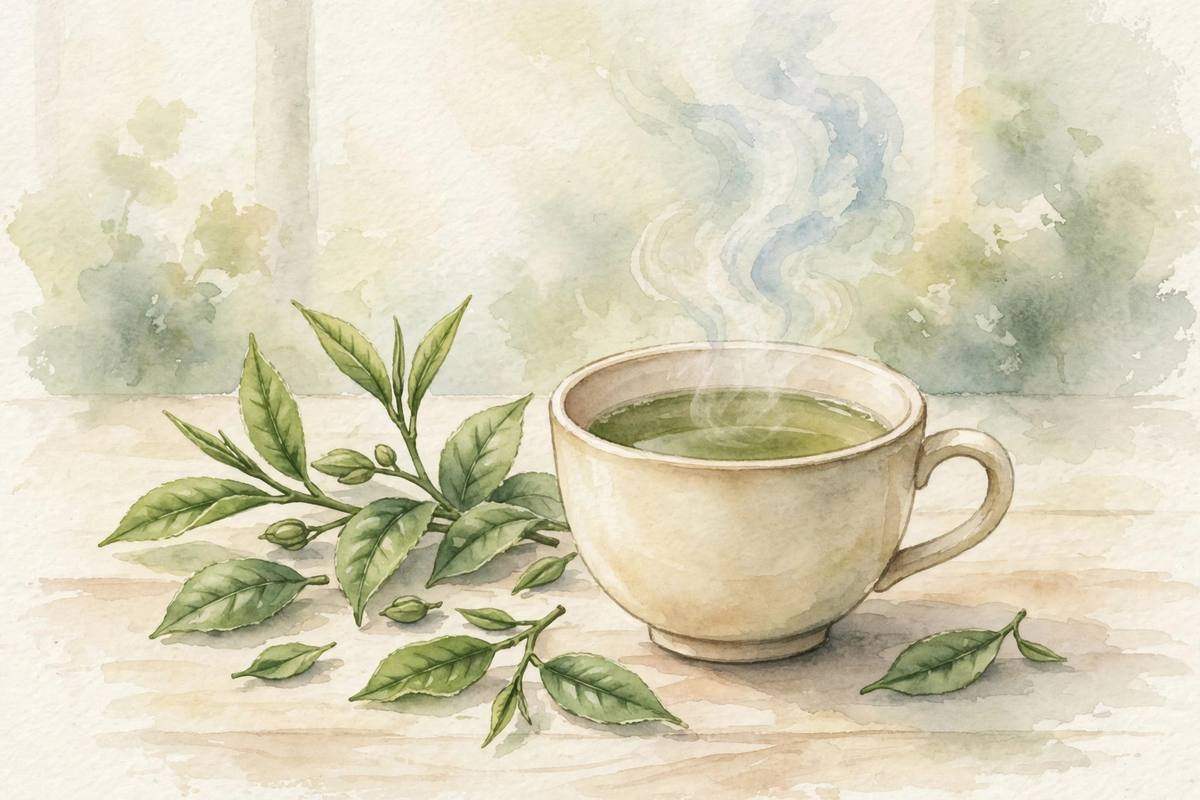
Yes — green tea is safe during pregnancy in moderation, at about 1 to 2 cups a day. The reason for the limit is not the tea itself but its caffeine: a brewed 240 ml cup of green tea contains roughly 20 to 45 mg of caffeine, so two cups stay comfortably within the 200 mg daily caffeine ceiling the American College of Obstetricians and Gynecologists (ACOG) advises for pregnant women. Updated 2026: brewed green tea is fine, but concentrated extracts and supplements are best avoided entirely.
That distinction — brewed tea versus concentrated extract — is the key to the whole question. This guide covers the caffeine math, the folate and iron caveats, and a simple daily caffeine budget you can use at a glance.
How Much Caffeine Is in Green Tea?
A 240 ml (8 oz) cup of brewed green tea contains about 20 to 45 mg of caffeine, depending on brand, leaf, and steep time — well below black tea (about 47 mg per cup) and far below brewed coffee (about 95 mg per cup), per USDA food composition data.
Several things shift a cup within that range:
Steeping time and water temperature
Green tea steeped for 1 minute holds roughly 20 mg of caffeine, while a 3 to 5 minute steep at near-boiling temperature pushes it toward 45 mg. For a gentler cup, steep 1 to 2 minutes at 80°C (175°F).
What the 200 mg Daily Limit Means for Your Cup Count
ACOG advises keeping caffeine intake below 200 mg per day during pregnancy. At 20 to 45 mg per cup, 1 to 2 cups of green tea fit easily — but the limit counts caffeine from every source, not just tea.
Here is a realistic day that stays under the ceiling: 1 cup of brewed green tea (about 30 mg) + 1 small square of dark chocolate (about 12 mg) + 1 cup of decaffeinated green tea (about 3 mg) = about 45 mg, well under 200 mg.
Now compare a day that crosses the line without any coffee at all: 2 large cups of strongly steeped green tea (about 90 mg) + 1 cup of black tea (about 47 mg) + 1 can of cola (about 34 mg) + a matcha latte (about 70 mg) = about 241 mg, over the limit.
Green tea alone is rarely the problem — stacked sources are. If you drink other caffeinated drinks, a pregnancy caffeine calculator can add up your full day in seconds and show exactly how much headroom you have left.
EGCG and Folate: What the Research Actually Shows
Green tea's main active compound is epigallocatechin gallate (EGCG), a catechin antioxidant — and the source of the most-cited caution about green tea in pregnancy: laboratory studies have shown EGCG can interfere with the body's use of folate, the B vitamin that protects against neural tube defects in early pregnancy.
Here is what the evidence actually says, kept in proportion:
- The folate interaction comes from cell and animal studies using concentrated EGCG doses far above what brewed tea delivers — a cup of brewed green tea contains roughly 50 to 100 mg of EGCG, while laboratory doses run into hundreds of milligrams.
- No human study has shown that 1 to 2 cups of brewed green tea a day causes folate deficiency or birth defects in women taking prenatal folic acid.
- Folate matters most in the first 12 weeks, when the neural tube closes, and a daily prenatal vitamin with 400 to 800 micrograms of folic acid (the dose ACOG recommends) covers the gap.
The honest summary: the EGCG-folate concern is real in a laboratory, but at brewed-tea doses with a prenatal vitamin, it is a reason for moderation, not avoidance.
Green Tea and Iron Absorption: The Timing Rule
Green tea contains tannins, plant compounds that bind to non-heme iron — the iron in plant foods, beans, and supplements — and reduce absorption. Drinking tea with a meal can cut non-heme iron absorption by 50 to 70% for that meal.
This matters in pregnancy because iron needs jump from 18 mg a day to 27 mg a day (National Institutes of Health, Office of Dietary Supplements), and iron-deficiency anaemia affects roughly 1 in 4 pregnant women worldwide (World Health Organization, 2023 estimates). The fix is timing, not abstinence:
- Drink green tea at least 1 hour before or 2 hours after iron-rich meals and your prenatal vitamin.
- Pair iron-rich foods with vitamin C — for example, lentils with lemon, or spinach with orange — which boosts non-heme iron absorption and partly offsets the tannin effect.
- If you take an iron supplement, take it with water or juice, never with tea.
Matcha, Iced Green Tea, and Bottled Varieties
Not every drink labelled "green tea" behaves like a cup of brewed green tea, and the differences are large enough to change your count.
Matcha
Matcha is powdered whole green tea leaf whisked into water, so you consume the entire leaf rather than an infusion. A standard matcha serving (about 2 grams of powder) contains roughly 60 to 70 mg of caffeine — about double a regular cup — and proportionally more EGCG. Count it as two cups of green tea in your daily budget, and skip large café matcha lattes that can use double servings.
Iced and bottled green tea
Iced green tea brewed at home has a similar caffeine content to hot green tea, about 20 to 45 mg per 240 ml. Bottled green teas are a different category: many are sweetened, with 15 to 30 grams of added sugar per bottle, and their caffeine varies widely, from near zero to 50 mg or more. Check the label for both caffeine and sugar.
Herbal "green" teas
Some products marketed as green tea blends are actually herbal infusions with added green tea, or contain other herbs altogether. Check whether green tea (Camellia sinensis) is actually listed as an ingredient. If you want a genuinely caffeine-free alternative, the question of whether peppermint tea is safe during pregnancy covers a popular one — peppermint tea is caffeine-free, though it can worsen heartburn.
Green Tea Extracts and Supplements: Why to Skip Them
Concentrated green tea extracts and supplements are the one form to avoid outright in pregnancy. A single extract capsule can contain 300 to 700 mg of EGCG — several times the amount in a cup of brewed tea — and concentrated extracts have been linked to liver injury in case reports reviewed by the U.S. National Institutes of Health LiverTox database, with FDA warnings about green tea extract-containing weight-loss supplements.
The problem is dose and concentration: brewed tea delivers EGCG slowly, in modest amounts; an extract delivers a pharmaceutical-scale dose in one swallow. There is no pregnancy safety data for these products, and no benefit that brewed tea does not already provide. Skip green tea extract capsules, "fat burner" blends containing green tea extract, and high-dose EGCG supplements for the duration of your pregnancy.
Green Tea and Pregnancy Symptoms: Nausea and Heartburn
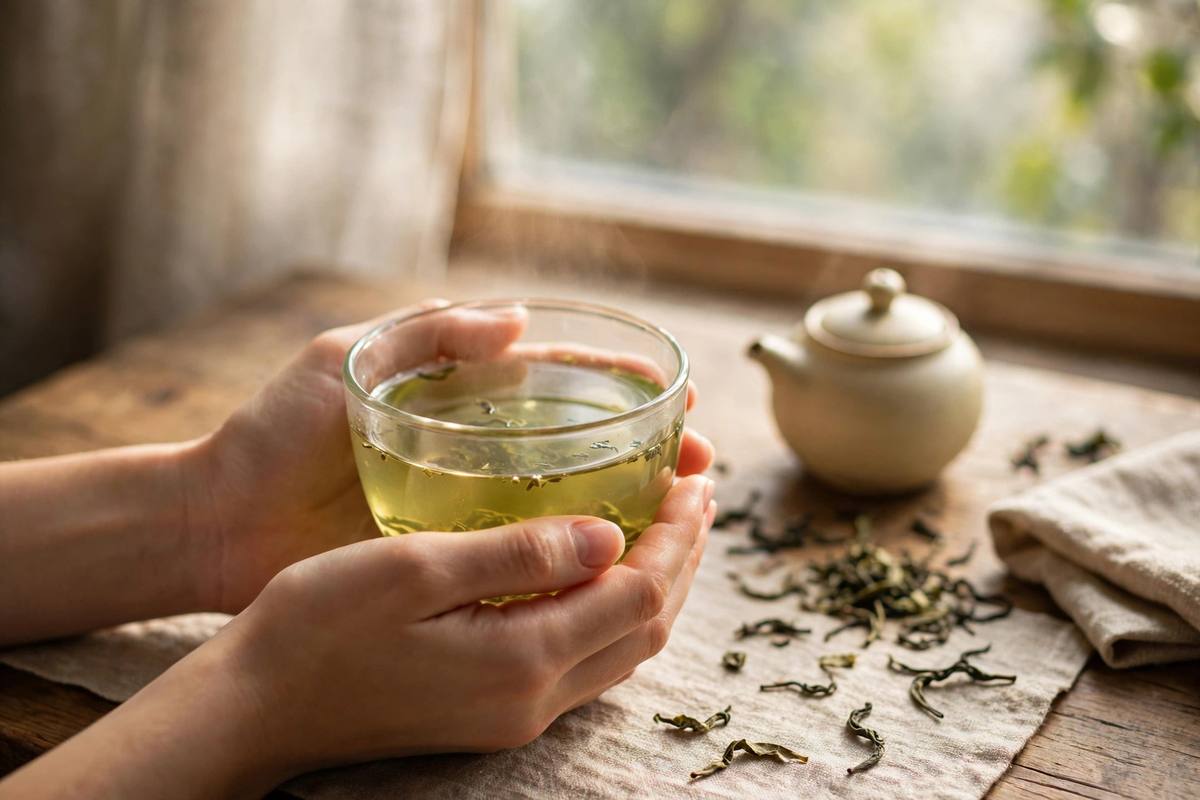
For nausea, warm liquids in general can feel settling, and many women find a weak cup of green tea easier than plain water in the first trimester. If nausea is your main issue, ginger tea and small frequent sips tend to help more, and how long pregnancy nausea lasts can set realistic expectations — for most women it eases by weeks 14 to 16.
For heartburn, green tea is less acidic than coffee and less likely to trigger reflux, but it is not neutral: a large cup on an empty stomach can aggravate heartburn in the third trimester. If heartburn is a problem, drink smaller cups, avoid tea on an empty stomach, and stop drinking it 2 to 3 hours before bed.
One caution worth stating plainly: if nausea is severe — you cannot keep fluids down for 24 hours, or you are losing weight — that is beyond home remedies and needs a clinician's assessment, not a different tea. Severe nausea (hyperemesis gravidarum) affects about 1 to 3% of pregnancies, and prescription options exist; the question of whether Zofran is safe in pregnancy covers one of them.
How to Brew Green Tea Safely in Pregnancy
Safe green tea in pregnancy is mostly about the basics, done consistently:
- Stick to 1 to 2 cups a day. Count matcha as two cups and add in caffeine from all other sources.
- Steep briefly. 1 to 2 minutes at about 80°C gives you flavour with less caffeine than a 5-minute boiling steep.
- Time it away from iron. Keep tea at least 1 hour before or 2 hours after iron-rich meals and your prenatal vitamin.
- Skip extracts and supplements. Capsules and "fat burner" blends are not a substitute for brewed tea.
- Watch the sugar. Sweetened bottled green teas can carry 15 to 30 grams of sugar per bottle — a separate concern from caffeine, especially if you are monitoring blood sugar.
- Buy from a trusted source. Tea leaves can carry pesticide residues and, rarely, lead from soil; choose brands that test their leaves.
As your pregnancy progresses, what feels fine in the first trimester may trigger heartburn in the third. Tracking how you feel week to week, alongside a guide to pregnancy symptoms week by week, makes it easier to spot patterns and adjust.
When to Talk to Your Clinician
Green tea at 1 to 2 cups a day needs no special permission, but bring it up at your next appointment if you are anaemic or taking iron supplements, take folic acid at a higher dose for a previous neural tube defect, have a liver condition, or regularly drink more than 2 cups a day. None of these make green tea forbidden — they are simply reasons to get advice tailored to your numbers.
The Bottom Line on Green Tea in Pregnancy
Green tea is safe in pregnancy at 1 to 2 brewed cups a day, within ACOG's 200 mg daily caffeine limit. Keep it away from iron-rich meals and your prenatal vitamin, count matcha as double, and skip concentrated extracts entirely. If you want a precise number for your own day, try the pregnancy caffeine calculator — enter every drink, and it will tell you exactly where you stand against the 200 mg limit. And if you are planning your overall nutrition for the months ahead, the pregnancy calorie calculator can help you work out how your energy needs change, alongside a week-by-week look at your pregnancy week by week.