
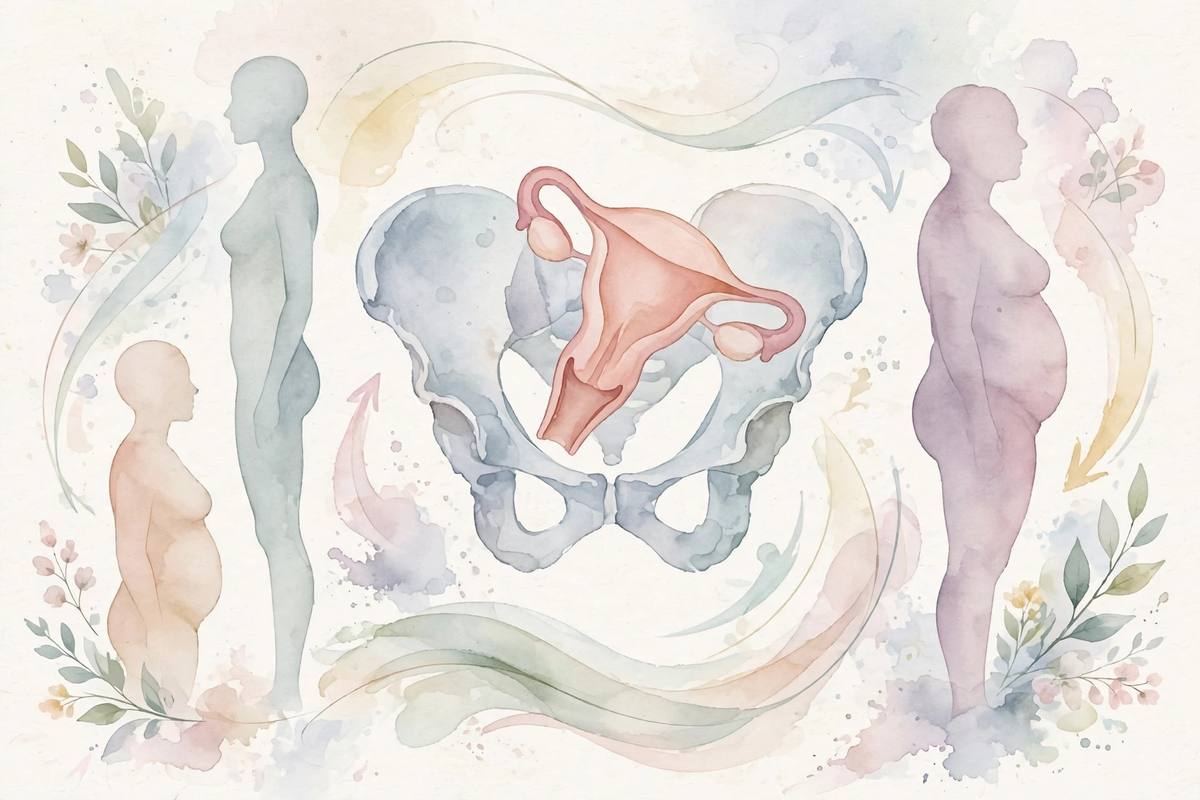
Most first-time mothers start showing between 12 and 16 weeks of pregnancy, and a bump that is obvious to other people usually appears between 16 and 20 weeks. Showing means the growing uterus has risen out of the pelvis and begun pushing the abdominal wall outward — and in a first pregnancy, tighter abdominal muscles that have never stretched before hold it inward for longer, which is why first-time moms typically show later than mothers on their second or third baby.
The Typical First-Pregnancy Showing Window: 12–16 Weeks
For a first pregnancy, the visible bump most often appears between weeks 12 and 16 of gestation. According to ACOG's 2024 patient guidance, the uterus stays tucked behind the pubic bone throughout the first trimester and rises into the abdomen at about week 12, which is when first-time moms typically start noticing a small curve in their lower belly. A 2024 meta-analysis in Obstetrics & Gynecology found roughly 70% of women report visible abdominal changes by week 16, and a 2022 study in the American Journal of Obstetrics and Gynecology found about 60% of first-time mothers notice a bump by week 14. Some women glimpse a hint as early as 10 weeks; others with stronger cores or higher body mass do not show until 20 weeks or later — both are normal. If you are not sure how far along you are, our weeks-pregnant calculator dates your pregnancy from your last menstrual period so you can match each milestone below to your own week.
Why First Pregnancies Show Later Than Second Pregnancies
A second pregnancy usually shows earlier — often between 8 and 12 weeks — than a first, which centers on 12–16 weeks. The baby does not grow faster the second time; the uterus reaches the same size milestones on the same schedule. It is the container that changes: abdominal muscles, connective tissue, and uterine ligaments stretched by a full-term pregnancy never fully return to their original tension, so they resist the expanding uterus less the next time around. Research in the British Journal of Obstetrics and Gynaecology (2023) found that 70% of women in their second pregnancy show by week 12, compared with about 40% in their first.
Tighter Abdominal Muscles Hold the Bump In
In a first pregnancy, the rectus abdominis and transverse abdominis — the front and deep-core muscles — have never been stretched by a pregnancy, so they hold the growing uterus inward for several extra weeks. A 2024 review in PLOS ONE linked stronger core tone to delayed visible showing: athletic first-time moms can stay subtle until 18–20 weeks even at a healthy weight, with no implication that the baby is small.
The Uterus and Ligaments Are Stretching for the First Time
The uterus and its supporting ligaments lengthen for the very first time during a first pregnancy, and tissue that has never stretched before gives way more slowly. In later pregnancies some residual laxity remains — like an elastic band that never quite returns to its original snap. This is also why diastasis recti, the midline separation of the "six-pack" muscles, develops most often during the first pregnancy and contributes to earlier showing in later ones, since the abdominal wall rarely fully closes the gap afterward without targeted rehabilitation. Our guide to how pregnancy bumps show in general covers this contrast across all pregnancies; here we focus only on the first-pregnancy timeline.
Your First-Pregnancy Bump Timeline, Week by Week
Weeks 8–12: Bloating, Not a Bump
Before 12 weeks, anything that looks like a bump is almost always bloating, gas, or water retention — not the baby. The uterus is still entirely inside the pelvis, roughly the size of a fist growing to a grapefruit (about 3 inches across), and progesterone slows digestion, which is why many women feel "thick" around the waist by week 10 with no true bump. A 2023 meta-analysis in PLOS ONE found only about 10–15% of first-time moms report a visible bump this early. This is also when most early pregnancy symptoms week by week — nausea, fatigue, breast tenderness — are at their peak, long before the bump arrives.
Weeks 12–16: The Uterus Clears the Pelvis
Around 12 weeks, the top of the uterus rises above the pubic bone — the first anatomical marker on the road to a visible bump. By 14 weeks many first-time moms notice clothes fitting tighter around the waist, and by 16 weeks the fundus (the top of the uterus) is palpable about halfway between the pubic bone and the navel. Roughly half of first-time moms see a noticeable change by 14 weeks, and this is the stretch where most women "pop," sometimes seemingly overnight as the uterus clears the pelvic rim.
Weeks 16–20: A Bump Other People Can See
Between 16 and 20 weeks, the bump graduates from something you can spot in the mirror to something other people can notice. The uterus grows from about 6 inches to the size of a cantaloupe, pushing the abdominal wall forward in a way fitted clothing can no longer hide. Many first-time moms feel their first fetal flutters (quickening) around 18–20 weeks — NHS guidance places quickening at 16–25 weeks overall, with first pregnancies typically feeling it later. Our piece on feeling your baby move at 14 weeks explains what early movement actually feels like, and our pregnancy week-by-week guide maps what the baby and your body are doing at each of these weeks.
Weeks 20–24: The Fundus Reaches the Navel
At 20 weeks, the fundus reaches the level of the navel — a milestone your provider can confirm by touch at your anatomy scan. From about this point, fundal height (measured in centimeters from the pubic bone to the fundus) roughly matches weeks of gestation, give or take 2 cm: about 20 cm at 20 weeks and 24 cm at 24 weeks, according to the American Pregnancy Association (2026). Fundal height becomes a routine growth check at prenatal visits through the second trimester of pregnancy and beyond.
Bloating vs. a True Bump: How to Tell the Difference
A true bump is firm, rounded, and low — and it does not come and go during the day. Bloating fluctuates: it builds after meals, shifts with gas, and often eases overnight, while a true uterine bump is present first thing in the morning and grows steadily week to week. The insight most articles skip is the timeline math: before 12 weeks the uterus physically cannot push the belly wall outward because it is still behind the pubic bone, so any "bump" before week 12 is definitionally not the baby — it is digestive and hormonal. After 12 weeks the test reverses: a firm, low, steadily growing morning curve is the uterus; a soft, gassy fullness that changes through the day is not.

Six Factors That Shift Your First-Pregnancy Timeline
A Retroverted (Tilted) Uterus
A retroverted uterus can push the visible-bump window to 16–20 weeks, up to a month later than the typical 12–16 weeks. When the uterus tilts backward toward the spine, it stays deep in the pelvis longer and grows upward before growing outward; it usually straightens forward on its own by 12–14 weeks, and some women report the bump "appearing overnight" around week 14. Roughly 1 in 5 women have a retroverted uterus (Peanut, 2024), and it affects neither the baby's health, conception, nor labor — only the timing of visible showing.
Body Mass, Height, and Torso Length
Higher body mass tends to delay when a bump becomes visible, because abdominal tissue cushions the uterus, while a slender frame or a short torso shows earlier. Two women at the same week can look months apart because the uterus is the same size but the soft tissue around it differs. A 2022 study in the Journal of Obstetrics and Gynaecology identified BMI and parity (the number of previous pregnancies) as the two key predictors of when showing begins.
Core Strength
Strong abdominal muscles can delay a visible bump even in a slim first-time mom. If you train your core regularly, expect the tighter muscle wall to hold the uterus inward a few extra weeks — this is normal and says nothing about the baby's size. It is the same mechanical principle behind the first-versus-second pregnancy difference, driven by fitness instead of pregnancy history.
Carrying Multiples
Twins or triplets accelerate the timeline: women carrying multiples often show by 10–12 weeks even in a first pregnancy. The uterus simply grows faster with more than one baby — a 2023 study in Twin Research and Human Genetics reported 90% of twin pregnancies show by week 14 — and higher hormone levels add early bloating.
Baby's Position and Amniotic Fluid
An anterior placenta (attached to the front wall of the uterus) can slightly delay when the bump looks defined, while extra amniotic fluid makes it more prominent earlier. Position changes the bump's shape more than its timing — a high carry versus a low carry is about where the uterus sits, not how big it is. A fundal height more than 2–3 cm off your week is worth flagging to your provider, since it can reflect fluid levels, growth patterns, or simply an off date.
Weight Gain Pace
How quickly you gain weight in the first half of pregnancy influences how early the bump looks "real." Steady, on-target gain supports a textbook 12–16 week appearance, while very rapid early gain blurs the line between body changes and bump, and very little early gain can keep things subtle longer. A pregnancy weight gain calculator shows whether your pace matches guidance for your pre-pregnancy BMI, which keeps the bump timeline in context.
When Bump Timing Is Worth Mentioning to Your Provider
Not showing by 20 weeks in a first pregnancy is usually just anatomy — but mention it at your next prenatal visit if it worries you. Your provider can confirm growth with fundal height and ultrasound; the bump's appearance is a rough proxy, not a diagnostic tool. Call sooner if you notice reduced fetal movement after quickening began, bleeding, or severe pain — those warrant a prompt call regardless of bump size.
Your bump will arrive on its own schedule, and for a first pregnancy that schedule most often starts between 12 and 16 weeks. As it grows, other second-trimester changes follow — from feeling your baby move to when pregnancy brain starts. To map each milestone to your own dates, our pregnancy week-by-week guide walks through the uterus, baby, and symptoms week by week, or use our weeks-pregnant calculator to confirm exactly how far along you are.