Can you get piercings during pregnancy? The short answer is yes — with conditions. Earlobe piercings are generally considered low-risk at any stage of pregnancy, but most professional piercers and obstetric guidance recommend postponing new navel, nipple, and genital piercings until after delivery — and for nipple piercings, until after breastfeeding ends. The issue is not the jewelry itself but infection and healing: pregnancy slows healing, raises infection stakes, and reshapes your body so quickly that some piercings may migrate, reject, or never settle properly.
How Pregnancy Changes Piercing Healing
A new piercing is a controlled wound, and pregnancy changes how wounds behave. The immune system shifts during pregnancy to tolerate the fetus — a modulation, not a collapse — but it means minor infections can gain ground faster, and healing tissue remodels more slowly. That matters because piercing healing times are long: the Association of Professional Piercers (APP) lists roughly 6–8 weeks for an earlobe, 6–12 months for cartilage, 6–12 months for a navel, and 6–12 months for a nipple. A 40-week pregnancy fits entirely inside most of those windows, so a piercing started in pregnancy will still be healing when your body is changing fastest.
Blood volume also rises by about 30–50% during pregnancy, and tissue swells — fingers, feet, and yes, tongues and earlobes can puff up, especially in the third trimester. Swelling around a fresh piercing tightens jewelry, traps bacteria, and turns a routine healing process into an irritated one. None of this makes piercings forbidden; it makes timing and placement the whole decision. If you know how many weeks pregnant you are, you can map any piercing plan against the healing calendar below.
Earlobe Piercings: The Lowest-Risk Option
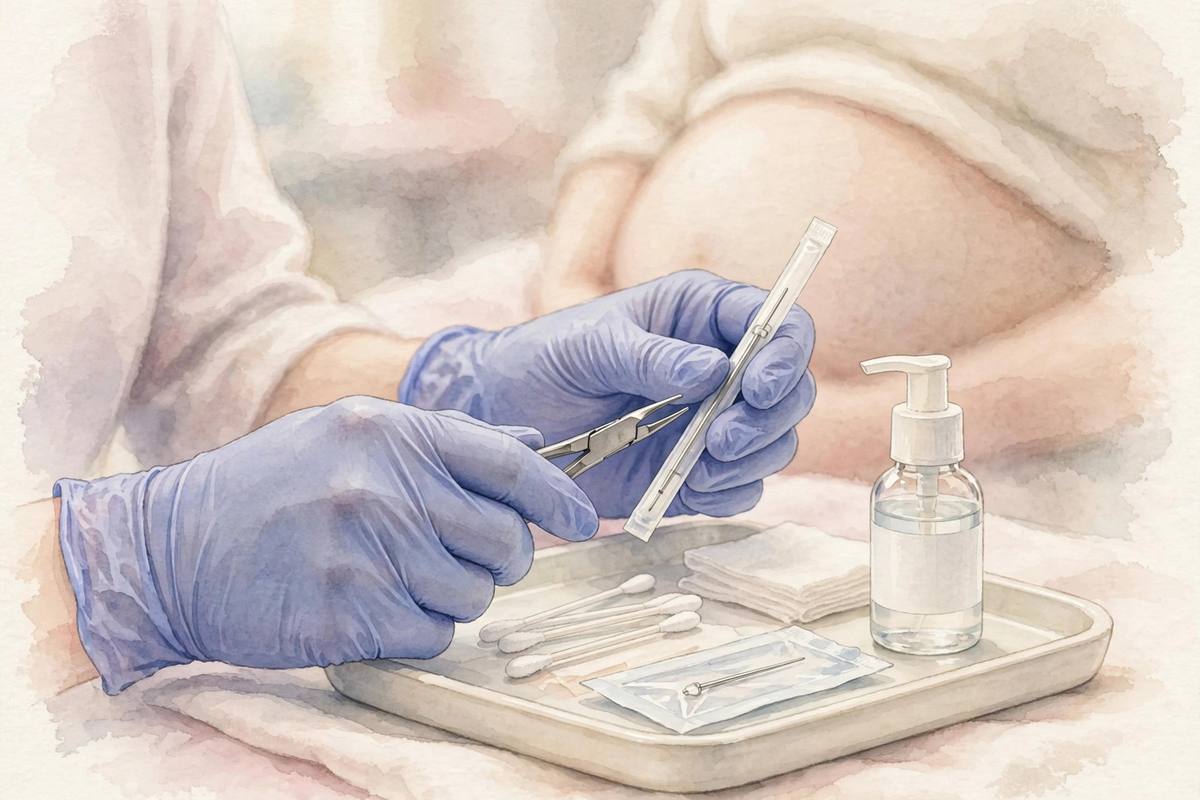
If you want a new piercing while pregnant, the earlobe is the safest choice. Earlobes heal in about 6–8 weeks — the fastest of any common piercing — the tissue there barely changes during pregnancy, and aftercare is simple: sterile saline twice daily, no twisting, no alcohol or peroxide. There is no growing belly stretching the site and no breastfeeding equipment passing through it.
The trimester math works in your favor here, and this is the detail most guides skip. An earlobe piercing done in the first trimester (weeks 1–13) is typically fully healed before third-trimester swelling begins around week 28 — the two timelines barely overlap. Even a second-trimester earlobe piercing (healed by roughly week 24–28) usually settles before the home stretch. Cartilage is a different story: at 6–12 months of healing, a helix or tragus piercing started in pregnancy will still be fragile when you are postpartum, sleep-deprived, and wearing a baby carrier strap across it — worth factoring in before you book.
Belly Button Piercings and a Growing Bump
The navel piercing is the one pregnancy most visibly argues with. A typical pregnancy belly expands fastest between weeks 20 and 40, exactly when a new navel piercing (6–12 months to heal, per APP aftercare guidance) would be at its most vulnerable. The growing abdomen stretches the piercing channel, which raises the risk of migration — the body slowly pushing the jewelry out — and rejection, where the skin thins until the jewelry works its way free. A migrated navel piercing can leave a permanent scar, which is a poor trade for nine months of wear.
If you already have a healed navel piercing, you usually do not need to remove it. Many women switch to a flexible PTFE (polytetrafluoroethylene) retainer — a soft, bendable bar that moves with the belly instead of resisting it — once the bump starts pulling. Watch for warning signs: the skin between the entry holes looking thin, pink, or stretched, the bar appearing longer as tissue thins, or persistent redness. Those signal migration, and removing the jewelry early leaves a much smaller mark than waiting for a full rejection. For context on how your body changes across these months, our pregnancy symptoms week by week guide tracks the physical shifts trimester by trimester.
Nipple Piercings: The One to Postpone
Nipple piercings deserve a firm "wait." The piercing channel passes through tissue that will soon produce milk, and a fresh or healing nipple piercing raises the risk of mastitis — a painful breast infection that affects roughly 1 in 10 breastfeeding women even without piercings, according to lactation research summaries. Jewelry can also damage milk ducts, trap bacteria against healing tissue, and — the risk every lactation consultant mentions first — come loose during a feed and become a choking hazard for the baby.
The standard clinical advice is unambiguous: remove all nipple jewelry before breastfeeding, every time, with no exceptions. For a piercing that takes 6–12 months to heal, that means months of removing and reinserting jewelry through a still-healing channel — an infection invitation you do not need while learning to nurse. The practical move is to let existing nipple piercings fully heal and retire the jewelry before your due date, then consider re-piercing after weaning. Questions about what else is safe tend to come up together — see our guides on Is Zofran Safe in Pregnancy and Are Tums Safe During Pregnancy for how clinicians weigh medication risks in the same cautious way.
Keeping the Piercings You Already Have
Existing, well-healed piercings are a different category from new ones: they are closed, stable channels, and pregnancy rarely forces their removal. Keep them clean, watch for changes, and make two small adjustments. First, metal matters more now — pregnancy can trigger new nickel sensitivity, so switch to implant-grade titanium, niobium, or 14k+ nickel-free gold if a previously fine piercing starts itching or crusting. Second, accommodate swelling: tongue piercings may need a longer bar in the third trimester, and rings in any location should come out if the tissue starts to feel tight.
Do not remove jewelry from a piercing that looks infected without talking to your provider first. A long-standing piercer rule applies doubly in pregnancy: pulling the jewelry can let the channel close over an active infection, trapping it under the skin. Keep the jewelry in, keep it clean with saline, and get medical advice promptly — the same "when in doubt, ask" logic that applies to DNA testing during pregnancy applies to any procedure-adjacent worry while you are expecting.
Infection Warning Signs: When to Call Your Provider
Every new piercing carries some infection risk; pregnancy raises the stakes because an untreated local infection can become systemic faster. Call your provider — don't just ask the piercer — if you notice spreading redness beyond the immediate piercing site, increasing heat or swelling after the first few days, yellow-green pus (as opposed to the whitish lymph fluid normal in early healing), red streaks radiating from the site, or a fever of 100.4°F (38°C) or higher. These are the same red-flag thresholds obstetric guidance uses for wound infections generally.
Prevention is mostly about the studio: choose a licensed shop that uses an autoclave (ask to see spore-test results), single-use hollow needles opened in front of you, and implant-grade jewelry. Avoid piercing guns — especially for cartilage — because they cause blunt-force tissue trauma and cannot be fully sterilized. A reputable piercer will also turn you away from navel and nipple work once they know you are pregnant; that refusal is a credential, not an inconvenience.
The Bottom Line on Piercings in Pregnancy
You can get piercings during pregnancy, but choose the piercing, not just the moment: earlobes are low-risk and heal within weeks, while navel and nipple piercings are worth postponing until after delivery (and after weaning, for nipples) because their 6–12-month healing windows collide with the fastest body changes of your life. Keep existing piercings clean, upgrade to implant-grade metals if sensitivity appears, swap to flexible retainers as your bump grows, and treat any infection sign as a call-your-provider moment. If you are early in pregnancy and mapping out the months ahead, our week-by-week pregnancy guide and the how many weeks pregnant am I calculator will help you time everything — piercings included — against the 40-week calendar.