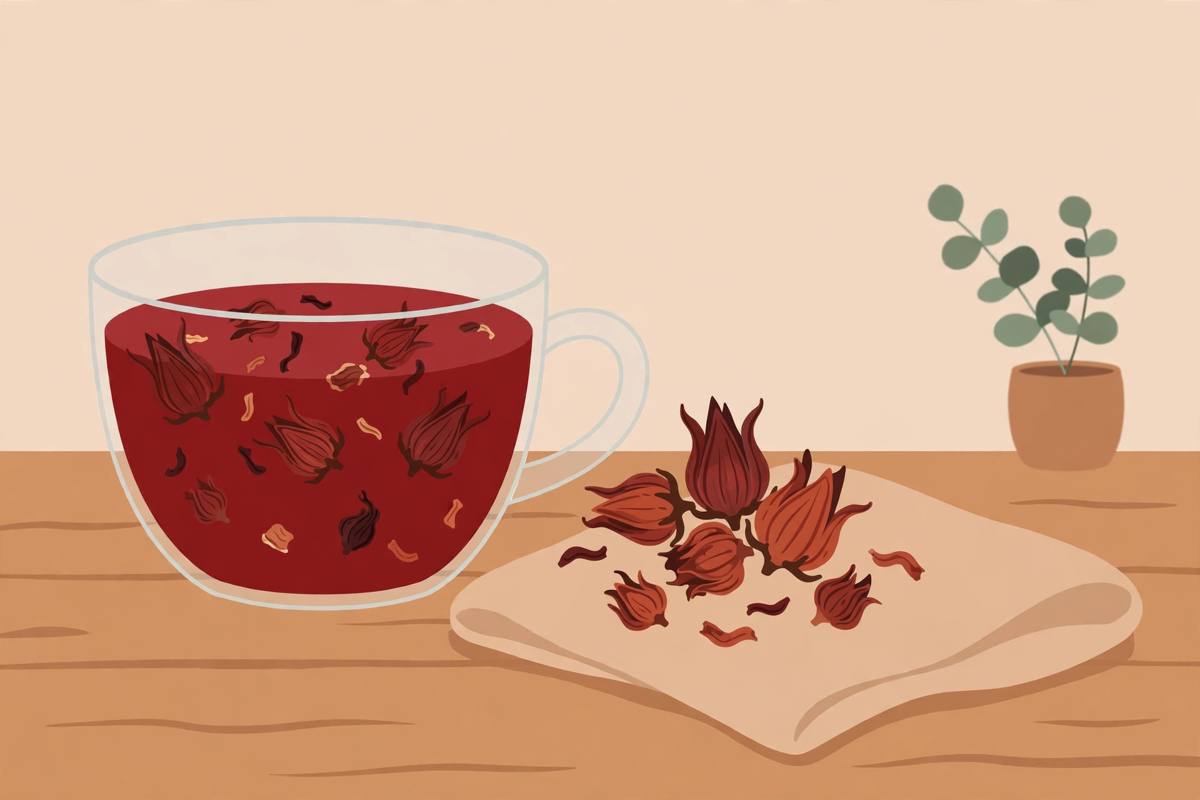
Hibiscus tea is generally not recommended during pregnancy, and most clinicians advise avoiding it until after delivery. There is no established safe amount in pregnancy, and the concern is not caffeine — hibiscus tea is naturally caffeine-free — but compounds in the hibiscus flower that may affect hormones and blood pressure. Because no human pregnancy trials have established a safe dose, the cautious advice is to skip hibiscus tea, including hibiscus in tea blends, and choose a different drink until you have discussed it with your clinician.
That answer surprises many people, because hibiscus tea looks like exactly the kind of drink that should be safe in pregnancy: it is a herbal infusion, it contains no caffeine, and it is widely sold as a health drink. The distinction that matters is that "caffeine-free" and "pregnancy-safe" are different claims. Several herbal teas are treated cautiously in pregnancy for reasons that have nothing to do with caffeine, and hibiscus is one of the clearest examples, alongside a small number of other herbs traditionally used to stimulate menstruation.
What hibiscus tea actually is
Hibiscus tea is an infusion made from the dried calyces — the fleshy sepals that surround the flower — of Hibiscus sabdariffa, a tropical plant also known as roselle. It is the same drink sold as sorrel in the Caribbean, zobo in West Africa, and agua de Jamaica in Mexico, and its deep red colour and tart, cranberry-like flavour come from the calyces themselves, not from added colouring. It is usually served hot or iced, sweetened or plain, and it appears in many commercial herbal blends, where it provides both colour and tartness.
That last point matters more than the tea itself. Hibiscus is one of the most common ingredients in fruit and herbal tea blends, including blends marketed as "berry," "tropical," or "fruit infusion," and it is often listed well down the ingredient list rather than in the product name. Someone who would never buy a box labelled hibiscus tea may still drink it daily in a fruit blend. If you are avoiding hibiscus in pregnancy, checking the ingredient list of every herbal blend matters more than avoiding the one box with hibiscus on the front.
What the research actually says
The research on hibiscus in pregnancy comes almost entirely from animal studies, and that gap is itself the reason for caution. In rat studies, hibiscus extract has been associated with delayed puberty in offspring, lower birth weight, and changes in maternal hormone levels, and separate studies have found that hibiscus can lower blood pressure and affect smooth muscle, including uterine muscle. These are animal findings, not human trial results, and the doses used in laboratory studies are often much higher than the amount in a cup of tea. But they are also the only controlled evidence available, because deliberately testing a potentially risky herb on pregnant people would be unethical — so the absence of human harm data is not evidence of human safety.
The hormonal concern has a specific mechanism behind it. Hibiscus has traditionally been used in folk medicine as an emmenagogue, a substance believed to stimulate menstrual flow, and laboratory work suggests its compounds can influence oestrogen activity. In pregnancy, anything that may stimulate the uterus or shift hormone balance is treated with suspicion, particularly in the first trimester, when the pregnancy is most vulnerable and organ development is under way. Blood pressure is the second concern: hibiscus is well documented as lowering blood pressure in non-pregnant adults — that is why it is marketed as a health drink — but a substance that lowers blood pressure can be a problem in pregnancy if blood pressure is already low, or if it interacts with medication.
The honest summary is that the risk is unproven in humans but biologically plausible, and the benefit of drinking hibiscus specifically — as opposed to any other caffeine-free drink — is small. That combination is why guidance from clinicians and pregnancy nutrition sources consistently lands on avoidance rather than moderation: there is no reason to accept an uncertain risk for a drink with easy substitutes.
Hibiscus in tea blends: the hidden ingredient
The most practical advice in this whole topic is to read the ingredient list on herbal teas, because hibiscus hides in blends. A tea labelled "wild berry infusion" or "passion fruit tea" may list hibiscus as its first or second ingredient, since it gives the blend its red colour and tart base. The same applies to iced teas, "detox" blends, and some flavoured waters. If hibiscus appears anywhere in the ingredients, treat the drink the same way you would treat a cup of pure hibiscus tea.
This is also the point at which the comparison with other teas becomes useful. Our guide to whether green tea is safe during pregnancy explains that green tea's issue is its caffeine content — about 28 milligrams per cup — which can be managed by limiting intake, while our guide to whether peppermint tea is safe during pregnancy notes that peppermint is generally considered acceptable in moderation. Hibiscus is different from both: its concern is not a quantity you can stay under, but an effect that has no established safe threshold, which is why the advice is avoidance rather than a daily limit.
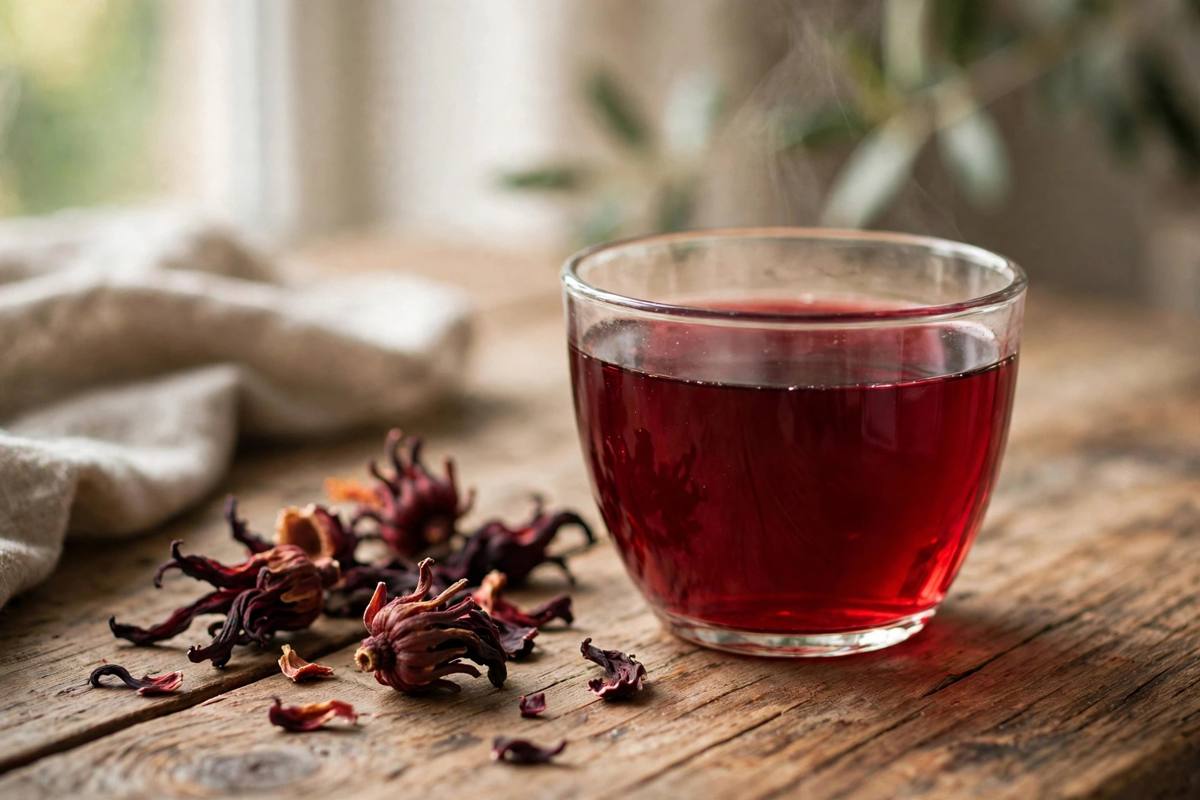
How much hibiscus tea is too much in pregnancy?
There is no established safe amount of hibiscus tea in pregnancy, and that is the direct answer to the most common follow-up question. Unlike caffeine, where guidance gives a clear daily ceiling — generally up to 200 milligrams per day in pregnancy, according to ACOG and the NHS — hibiscus has no equivalent number, because no study has identified a dose that is safe for pregnant people. "Just one cup" is therefore not a reassurance backed by evidence, even though a single occasional cup is very unlikely to be the same exposure as the high doses used in animal studies.
That distinction matters for anyone who drank hibiscus tea before realising they were pregnant, or before learning about this advice. A few cups in early pregnancy, before you knew, is not a reason to panic: the animal findings come from sustained, high-dose exposure, not from an occasional cup, and there is no evidence that a small past exposure causes harm. The sensible response is to stop drinking it going forward and mention it at your next prenatal appointment if you are worried, rather than carrying anxiety about cups already drunk. The advice is forward-looking avoidance, not retrospective alarm.
Safer alternatives to hibiscus tea
The good news is that the things people actually want from hibiscus tea — a caffeine-free, tart, refreshing drink — are easy to replace. Peppermint tea is generally considered safe in pregnancy in moderation and is often recommended for nausea; our guide to how long pregnancy nausea usually lasts covers the timeline it is most useful for. Ginger tea has the best evidence base of any herbal tea in pregnancy, with studies supporting its use for nausea at modest amounts, typically up to about 1 gram of ginger per day. Rooibos tea is caffeine-free and is generally regarded as acceptable in moderation, although, like all herbal teas, it is best drunk in reasonable amounts rather than by the litre.
Fruit-infused water is the simplest substitute of all: sliced citrus, cucumber, or berries in cold water give the tart, refreshing quality of hibiscus without any herbal compounds at all. If you specifically miss the deep red colour and tartness, a cranberry-based drink — checked for added sugar — comes closest in flavour. The pregnancy symptoms week-by-week guide tracks when nausea, heartburn, and other symptoms peak, which can help you choose a drink for the symptom you actually have rather than defaulting to a herbal blend.
When to talk to your clinician
Most people can simply switch drinks and move on, but a few situations are worth raising with a clinician. If you have been drinking hibiscus tea daily throughout pregnancy, if you take blood pressure medication, or if you have a history of miscarriage or preterm labour, mention the hibiscus intake at your next appointment so it is on record. The same applies if you are using hibiscus in supplement form — capsules or concentrated extracts deliver far higher doses than tea, and those are a clearer reason to stop and ask. If you are tracking your pregnancy dates, the due date calculator gives your 40-week date, and the pregnancy week-by-week guide shows what is developing at your current stage, which can help you frame questions about timing and exposure.
The bottom line is straightforward. Hibiscus tea is caffeine-free, but that does not make it pregnancy-safe: animal studies raise plausible hormonal and blood-pressure concerns, no safe human dose has been established, and the drink hides in many herbal blends. Until better evidence exists, the cautious choice is to avoid it during pregnancy and choose peppermint, ginger, rooibos, or fruit-infused water instead — and if you have already drunk it, simply stop and mention it at your next appointment. For a quick check on your dates while you sort out your drinks, the due date calculator is a useful starting point.